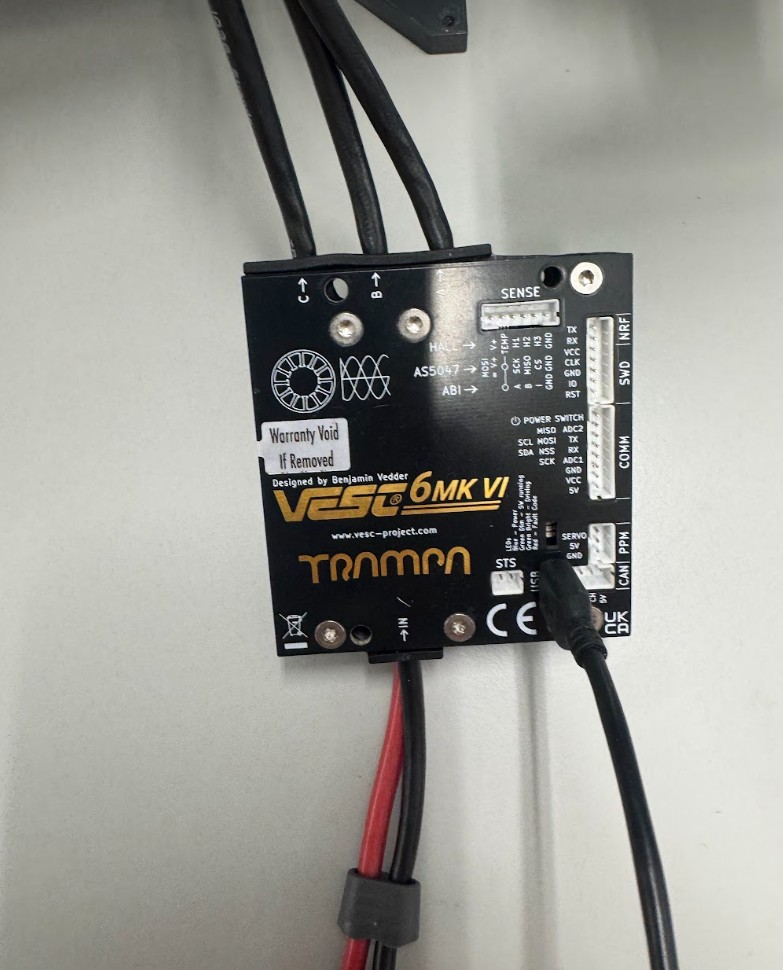
This was a project that I began working on at the start of my junior year of university. It began with an empty Traxxas RC car chassis and VESC speed controller to control the Brushless DC (BLDC) motor driving the car. The original chassis and the hardware used to control the vehicle can be pictured to the left. The VESE speed controller was controlled serially using a USB connection to a computer. The speed controller plugged directly into the NVIDIA Jetson that we used as the main onboard computer for the project. We also had an Arduino who's only responsibility was to control the steering servo motor. This was done because the GPIO pins on the Jetson had a very noisy PWM signal that resulted in jittery and unreliable steering behaviour. This was the first clue that we should migrate all low-level hardware control to a smaller microcontroller, such as the STM32, and delegate the higher-level tasks to the Jetson.
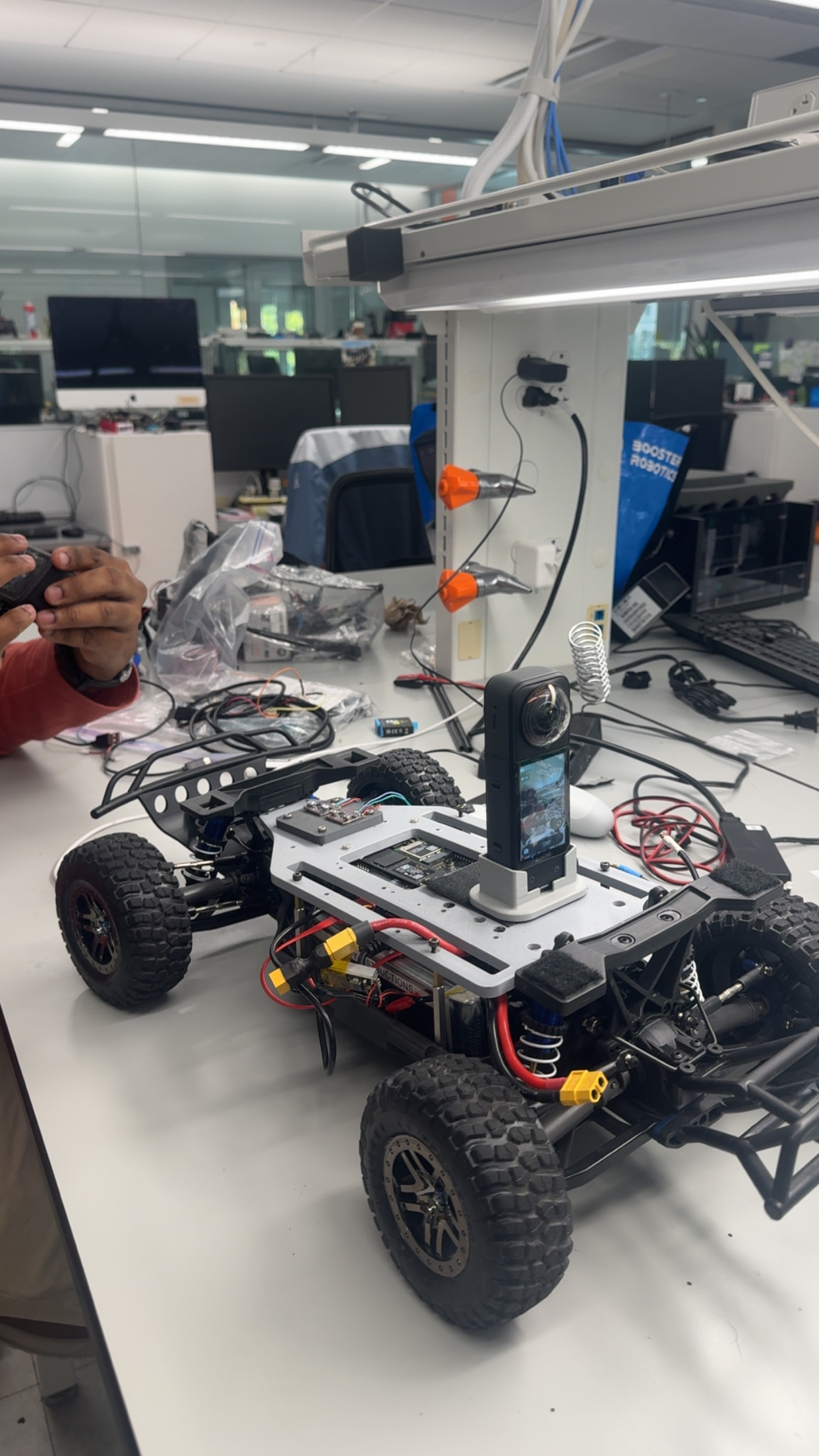
Over time, the hardware controlling the vehicle evolved from an off the shelf USB speed controller to a more DIY solution which involved an STM32 microcontroller with custom firmware to control the BLDC motor as well as the servo motor.